No. 30 Missing the Point argumentum ad logicam
Fallacy Fallacy
In Turkish: Safsata Safsatası
My argument was bad. My claim is still true. Take the umbrella.
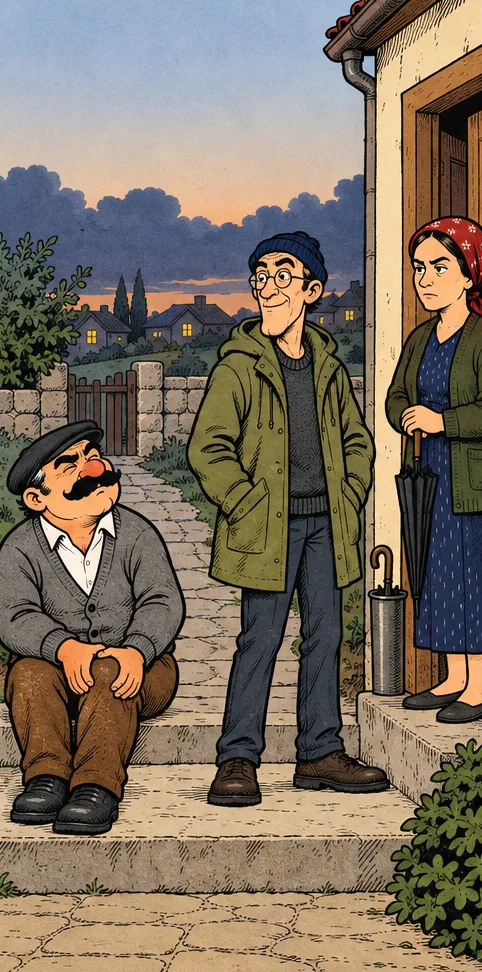
Rain tomorrow. My knee aches, and my knee’s never wrong.
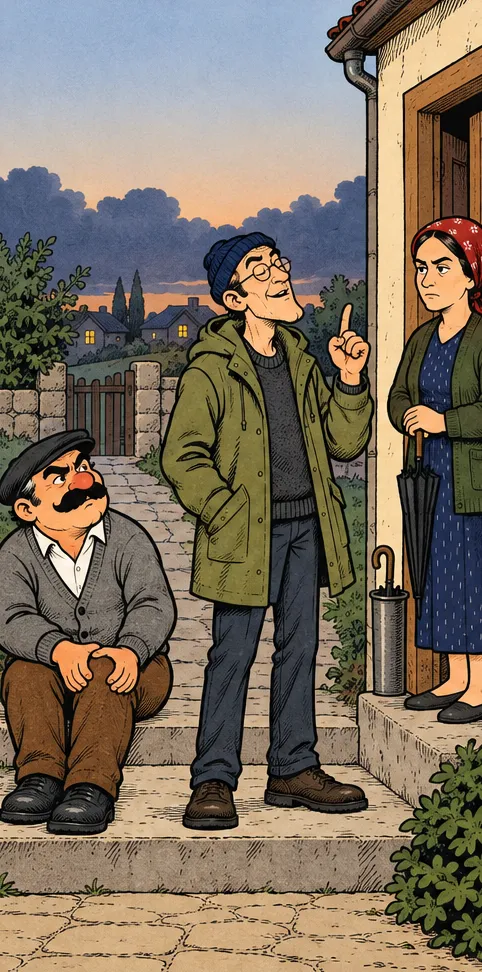
A knee isn’t evidence, Temel. That’s a fallacy! So tomorrow’s sunny.
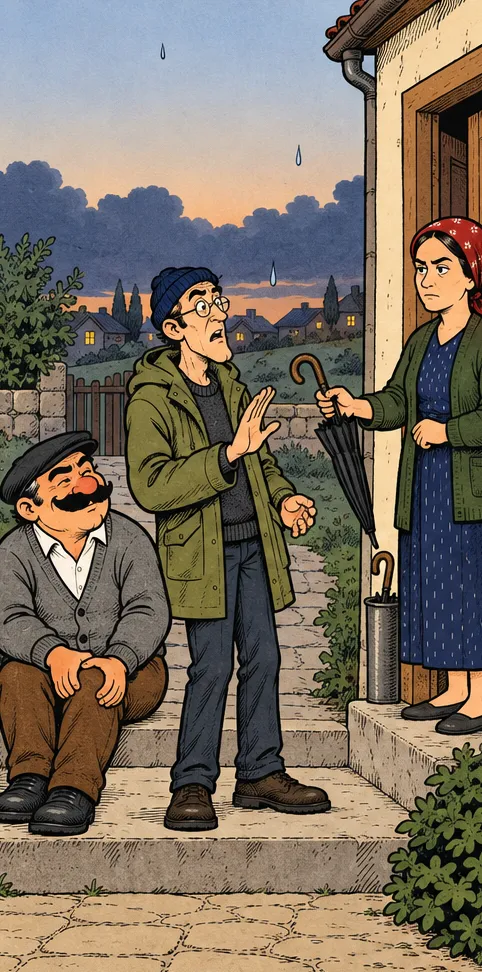
You beat the argument, not the weather, Dursun. Take the umbrella.
What is it?
Concluding that a claim is false because it was argued badly. A bad argument doesn’t prove the claim; but it doesn’t refute it either. True things are defended with terrible reasons all the time.
The pattern
- A committed a fallacy while arguing for X.
- Therefore X is false.
Why it fails
Perhaps the most important entry on this site. Once you learn the fallacies you start seeing them everywhere, and “fallacy!” turns into a weapon. But spotting a fallacy says only this: this argument doesn’t prove X. It says nothing about X. An aching knee doesn’t prove rain; it can still rain tomorrow. Refuting the argument and refuting the claim are separate jobs; the second needs evidence of your own.
How to spot it
- The pattern “you committed a fallacy, so you’re wrong”.
- The moment the argument falls, the claim is treated as fallen too; nobody looks at the claim separately.
- The name of a fallacy is used as a magic word that ends the discussion.
What to say
Separate them: “True, that argument doesn’t work. But the claim’s still on the table. Is it true or not; let’s look at that.” Don’t make the same mistake yourself: refuting someone’s argument doesn’t mean you’ve won, only that one argument is out.
When it’s not a fallacy
If a claim’s only support was an argument that has been refuted, there’s no reason left to believe it; saying “unproven” is legitimate. That is not the same as saying “false”. The fallacy is treating an unsupported claim as a refuted one.
Examples
- Health“Quit smoking; the neighbour quit and lost weight.” Weak argument; quitting is still right.
- Work“This plan is good because the boss says so.” Appeal to authority; the plan may still be good, on its own evidence.
- Social mediaSomeone said a true thing with a false statistic; the statistic was debunked, and the true thing was counted as debunked too.
- Family“Go to bed early or the bogeyman comes.” There’s no bogeyman; bed early is still a good idea.